
Jennifer Davis was quoted in an article by Inverse in the article, The Future of Transparent Screens Isn't Iron Man's Smartphone- It's Bigger and Better.


Jennifer Davis was quoted in an article by Inverse in the article, The Future of Transparent Screens Isn't Iron Man's Smartphone- It's Bigger and Better.

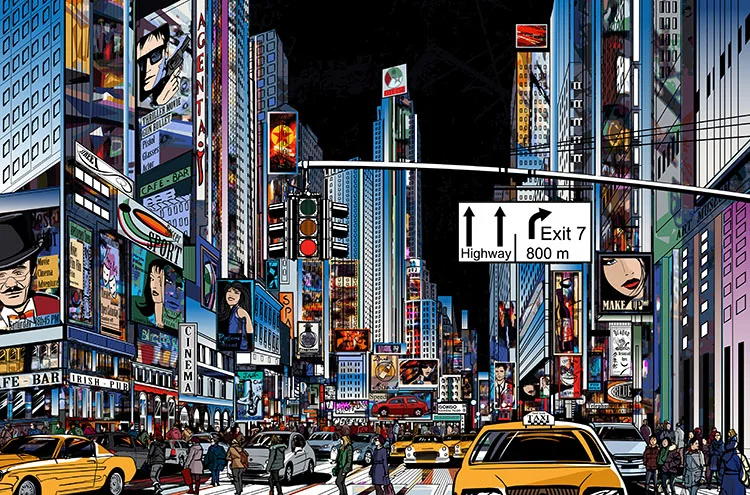
Times Square, that historic and iconic spectacle in New York City, is in a class of its own. It is digital signage on steroids. It has a larger-than-life scale that is awe-inspiring. It has a reputation and historic significance. It is one of the most popular tourist attractions in the city and possibly the world. It’s more famous than its namesake newspaper. It has taken over-development and made it into a feature. And found a way to monetize that over-development with ongoing investment in new equipment and content. Despite similar spectacles in Tokyo or London, it remains a one of a kind.
So, what can this teach us about digital signage in other environments? Be awesome, tie into the uniqueness of the space, and be one-of-a-kind. And use those things to build a business model for success.
So, what can it teach us about innovating our businesses? Be awesome, tie into the uniqueness that is inherent in the space, and be one-of-a-kind. And use those things to build a business model for success.

"Don’t say 'yes,' just because saying 'no' is scary."
- Isabelle Roughol talking about Volkswagon engineering cars to cheat emissions test instead of admit that they fell short of their public emissions goals
“Unable to reach the lofty PR goal, engineering chose to lie rather than disappoint the boss, which is how every other corporate disaster begins,” she continues.
There is a scene in the movie Talladega Nights, where the race car driver character played by Will Farrell, sells the advertising space on the windshield of his car. “This sticker is dangerous and inconvenient,” he says. “But I do love Fig Newtons” (the advertiser whose logo was obscuring his views).
What are the Fig Newton ads that you see in the real world? Ones that cross over the line. They are everywhere.
Phil Lenger from Show+Tell recently presented at a conference where he showed a picture of advertising gone wild when no one was advocating for the customer or the space in the conversation. Every single surface of a public market was covered in some kind of messaging or brand language. How can we ensure that this doesn’t happen in the future? Is the role of the space owners? Of government or municipal entities?
Usually a fan of small government, I think this is an area where governments or public entities need to set and enforce standards based on what the consumers in the community want to experience. The advertisers don’t have the context to limit themselves. The space owners have a conflict of interest. The individual consumers are not powerful enough to set and enforce policy (and the tools that consumers have to use to encourage self-regulation or government intervention, which include organizing rallies, petitions, boycotts, or the like, aren’t very efficient and of marginal effectiveness in a noisy environment with a fickle “news cycle” driven attention span).

Software as a Service (SaaS) is all the rage today with companies like Salesforce.com racking up huge profits and trading multiples, and companies like Microsoft introducing their own versions of the same. The same is true with people turning data insights into a business model (data-as-a-service or analytics-as-a-service). But the “as-a-service” business model isn’t new. Here are some examples of other products that have been sold as a service.
Alcohol-as-a-Service (AaaS): a bar
Food-as-a-Service (FaaS): a restaurant
Equipment-as-a-Service (EaaS): equipment rental and staging
Personal-hygiene-as-a-Service (PHaaS): beauty salons and barber shops
Reading-as-a-service (RaaS): story time at the library
Exit-as-a-Servce (EaaS): what a doorman does when you leave the hotel
Wayfinding-as-a-Service (WaaS): what the hostess does when she shows you to your table
Shelter-as-a-Service (SaaS): a hotel or even Airbnb

“We can’t really afford to spend time on things, unless they have a shot of being really epic." - Phil Libin, former CEO of Evernote, now with General Catalyst
That is true for each of us. Time is the only commodity that is of limited supply to everyone. Use it wisely. Pursue epic.

Investors and advertisers love networks that have captive audiences. They love that fuel dispenser toppers catch people when they are tethered to a gas station with an 8 foot hose. They love that people waiting for a movie to start in a cinema have to watch something when the lights are down and their cell phones are put away. The captive audience that can’t escape the message you are trying to deliver.
But, think about it from the user’s perspective. Who wants to be captive? “I want to be a captive audience,” said no one ever.
People want to be captivated, not captive. It’s a higher calling that we should all strive for.

We don't care about diversity because it's in vogue. We care about it because we like winning." - Mike Gamson, SVP Global Solutions, LinkedIn

I read recently that we should not ask kids, “What do you want to be when you grow up?” Instead, we should ask, “What problems do you want to solve?” This line of questioning promotes thinking about the content of the work and the impact you can have on society.
In the same way that this is a good method to frame things for children, it can also work for executives. I recently reflected on the kind of problems that I strive to solve in my work. Identifying the problems is harder than it would seem.
I could easily identify the activities of my days and even my over-arching objectives, but framing them as problems was a good exercise. Especially because I, like you, consider myself and my company a solution provider, and those who provide solutions must deeply understand the problems they are solving.
These are the problems that I spend my days solving as a marketing executive and product strategist:
The challenges of prioritization and allocation of time, energy, and resources to the most important things required for us to grow our business profitably.
Cracking the code to bring our brand and product offerings to the forefront in the minds of potential buyers and to create identity for our products and harness demand in the market for our products that we can deliver to our sellers globally.
The problems related to recruiting, retaining, coaching, and celebrating our employees. Talent is at the heart of everything and creating a happy and inspired work environment is key to keeping talented employees a part of your team.
Solving the balance between my responsibilities in the office (and to our customers, partners, and employees) with my family and with the communities of which we are a part (i.e., the AV community, the business community in all the cities where we have offices, the marketing professional community, our neighborhood, and a group of students and mentors that is served by a local non-profit with which I serve).
What problems are you solving in your role at work? What problems are you solving at home? When you take the time to look at your roles from a different perspective, you might just get your next big idea or at least discover a way to improve your productivity and make your day-to-day more meaningful. We should all be problem solvers first and foremost.
This blog was featured in Women On Business blog.

The world said “good bye” to an innovator. Born Prince Rogers Nelson, the singer, songwriter, and style icon made a mark on the world of music and fashion.
In 1993, Prince changed his name to an unpronounceable symbol, something Prince called a “love symbol.” At the time he was reportedly fed up with his record label, was trying to get out of his contract, and wanted to make a break from the past (according to an interview with Larry King in 1999). So, he reached out to graphic designer Mitch Monson, with Trollback and Company in Prince’s hometown of Minneapolis, to design a symbol that represented the artist – androgynous, edgy, and whimsical.
So, as we reflect on the man and his career, what can Prince teach us about branding:
1. The brand does not belong to the company.
It belongs to those with a relationship to the brand.
To reproduce the love symbol in print required a special font (which the label had to send out on floppy discs to editors and journalists). And in the end, most didn’t even try. The media started referring to him as “the artist formerly known as Prince,” a moniker that stuck. This became his brand, even after he started using his name again for stage performances and albums. Even fans, who might have been puzzled by the change, found ways to refer to him. This is a lesson for marketers who think they can control their brand. The brand is truly owned by those who interact with the company, it’s employees, it’s products, and in the end, build both a logical and emotional connection. The best we can do as leaders and brand managers is to influence how people perceive the brand by putting ourselves in their shoes and advocating for what they need.
2. There is power in color
The artist solidified his relationship with the iconic purple shade with his very popular “Purple Rain” album and movie. In memorials all over the world this week, the color purple has been featured prominently. It reminds me that in the world of marketing, which is now dominated by data analysis and ROI discussions, that there are some basics that can’t be ignored and one is the power of color. McDonald’s red and orange, Coca-Cola’s red, IKEA’s blue and yellow, Facebook blue, Amazon’s orange smile (smirk?), John Deere green, Crown Royal’s velvet purple, and many other brand color associations are very strong and help propel the brand’s expansion into new markets and offerings. Most people don’t have a signature color, but when we think of branding, having a distinctive color way is part of what the leading brands and artists rely on to communicate what they want their brand to stand for. Purple was perfect for Prince’s brand, as it speaks to royalty, creativity, and the spiritual. A few years ago, Fast Company published an exceptional article about the impact of color on brand that is worth reading.
3. Brand building involves risk
It is said that his record sales after the name change fell precipitously, but he secured his place as an eccentric and passionate artist who was forging his own path. Other leading brands have reinvented themselves over the years, to emerge stronger and more engaged with their users, but that isn’t without pain in the process. I think of what Netflix did with their DVD customers when they moved the brand to streaming and rebranded it’s DVD service as “Qwikster” (a brand they have since shuttered. We can all think of other rebranding, packaging design, or logo design blunders. But those who live through the transition (and don’t change for change sake), can reap rewards.
And perhaps the most important thing that Prince taught us about branding this week, is that brands are a legacy. They have value. They spark emotion. They are celebrated and mourned. And, no matter what tragedy strikes, they live on.
This article was posted on LinkedIn Pulse.

"Some moments are meant to be forgotten. You can't dance at weddings anymore." -Jared Ficklin

I know it’s true. And you can join me in blaming the internet. I am nearly 100% sure you have never actually read the Terms and Conditions to which you just agreed.

I recently heard Heather Andrew from NeuroInsights speak at a conference. She explained how our brains are separated into right and left sections. Emotions are on the right, but language is on the left. So, to express your feelings is to pass them between the two lobes of the brain.
This has several implications. First, it can be difficult for some, as men, for instance, have less pathways between the lobes. And secondly, the act of putting emotions into words, changes them. Makes them more rational. Our anger, becomes righteous anger or defensiveness. Our shame becomes blame. Our irrationalities and impulses get sanitized when they get communicated.
Perhaps instead of speaking our emotions (and passing them to language on the left), we should instead use our right brains to sing them, paint them, or act them out in dance. Or perhaps, that is precisely what the performing arts already do?

It has long been said that if you really want to learn something, you should teach it. But research shows that the same can be said for tweeting. When NeuroInsights ran focus groups with consumers who were shown programming and told they would need to tweet about it, paid more attention and retained the information better than those in the control group. So, instead of “pay attention, it might be on the test” perhaps we should say “pay attention, it might be in a tweet.”

#CreatorsRule

It can transform beliefs. It can transform behavior. It can transform business models.

Jennifer Davis was a mentor at Portland Business Journal's 2016 Mentoring Monday event.
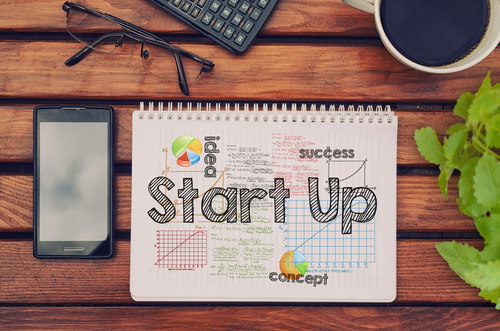
Start-ups are the laboratories of the economy. Doing things that established companies don’t do, won’t do, or can’t do.


