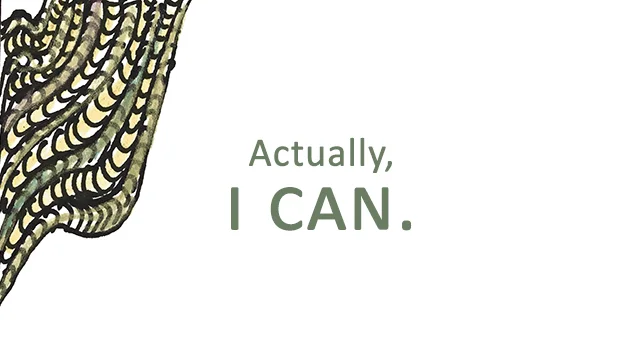
"The best quality to look for in a friend is curiosity and a sense of humor." - Iris Apfel


"The best quality to look for in a friend is curiosity and a sense of humor." - Iris Apfel

“Have the guts to own your career,” said Art Gensler, the founder of Gensler, the largest architecture firm in the world. “Refuse to play the victim. You have one life and what you do for a living makes up a large part of your time. Make the most of it. Make it joyful and rewarding. Develop a sense of purpose for what you are doing.”

A lot has been written about the importance of getting girl’s into math and science. I have spent a lot of time in the recent years writing about and advocating for STEM (science, technology, engineering, and mathematics) education, especially for girls who are under-represented in these fields and careers.
I recently heard Hannah Fry’s TED talk on “The Mathematics of Love” which was funny and informative. Galileo Galilei, the Italian astronomer and physicist, said, “Mathemetics is the language in which God has written the universe.” Hannah was applying this language to the study of dating practices, which made for interesting insights.
But if math is a language, those of us who primarily think and speak in English, German, or Chinese have a second language to learn to understand the mysteries of the universe or the mysteries of our own social calendars.
What if we taught math as if it were a second language? We acknowledged that it required its own vocabulary and grammatic rules. We acknowledged that with practice anyone could learn it, not just the privileged few that were “good at math” (whatever that means).
I wonder if this reframing would help discouraged 4th graders to pursue math even if it was difficult at first and 7th grade girls who were good at math to feel proud that they were mastering the language of the universe, not labeled as “geeks” or “nerds” among their peers.

"Be the person your dog thinks you are." - Bert Jacobs, founder of Life is Good

In his book, Art’s Principles, the founder of Gensler, Art Gensler recounts how important it is for employees to wash their own dirty dishes in the company cafeteria.
“It sends four key messages,” he wrote.
These same principles apply to other things you might do at work. If you volunteer for a committee to benefit employees (even though you aren’t in HR). If you help straighten up a conference room at the end of the meeting (even if you are not whomever might do this if you didn’t and if you don’t know, find out) If you take the time to write up some company success to share with employees so that they can learn about it and feel proud (even though you aren’t in marketing). Taking the time to get to know everyone in the office and being interested in their careers (even though you aren’t the manager). Introducing people you meet to your company and what makes you all great (even though you are not in sales).
If everyone does things that aren't their job for the good of the group, then the group is good.

"It's easier to accept others, than to change them. It's wiser to understand them, than to get angry. And most of the time, it's more fun to love 'em, than to leave 'em." -Susan Clark, founder of HeartSpark

Elephants are known for being smart and for having great memories. They earn this reputation in many ways, but I read recently a factoid about elephants that fascinated me. Elephants leave the way they came in. If they enter a valley from the north, they will leave through the same pass. Perhaps it is because of their great memory or exceptional sense of direction, or it could be because they are smart enough to know what they can expect from that direction. Or perhaps they are very risk adverse.
In any case, I think we are a lot like elephants. We tend to come and go via well-worn paths, take the safe routes, and cover the same ground over and over before venturing a new way. Memories make us nostalgic and nostalgia leads up to repeat history.
This could be great. Or it could lead to missed opportunities and chances never taken.

It is the 23rd of December and all over the US, holiday shoppers are out buying last minute gifts. It reminds me again of the pervasiveness of procrastination.
I recently watched Ted Urban’s TED talk on procrastination (and highly recommend it). He describes that master procrastinators have in their brain a “rational decision maker” who would make logical time management decisions if it wasn’t for his pesky shipmate the “instant gratification monkey.” The Monkey finds endless distractions and is only frightened by one thing: the “panic monster.” The monster that reminds of looming deadlines or the impact of poor performance. His description of procrastination sounds like laziness, lame excuse making, or even attention deficit disorder. He ends his talk recounting the misery that is caused by procrastination, in his own life and that in people that he encounters around the shared topic of procrastination.
And this negative view of procrastination is as prevalent as procrastination. We say “Now or Never” or “Time is Money.” Even the prolific Ben Franklin is said to have penned the popular proverb “Do not put off until tomorrow what you can do today.” Practical advice from an over-achiever, we think. We idolize those who save, plan ahead, and are prepared. We fear missing out or missing the train with slow decision making. There is a general view that people who are operating at higher levels of performance or efficiency avoid procrastinating. I have been taught in my personal and professional life that making fast decisions (and course correcting, if necessary) is infinitely better than acting slowly.
But, is that true?
Is procrastination a vice or is it a virtue?
Here are three reasons why procrastination could be the best approach.
Whether through more life experience, through the solicited advice of others, or with the revealing of new facts and information related to the decision, it is safe to assume that you will know more tomorrow than you do today and that might lead to a better decision. Of course, we can get stuck in the cleverly titled “analysis paralysis” loop where we never make a decision, but perhaps that is a risk you take when trying to be as prepared as possible to make the right decision.
When I see holiday shoppers out on Christmas Eve (and I see them because, well, I am often with them), I wonder why they procrastinated. They could be horrible at keeping secrets or perhaps they have been extremely busy. Or, they could have been waiting until payday or until a particular item they wanted was on sale. In other words, the options they would have had yesterday are not the same or as favorable as the ones they will have tomorrow. Tomorrow they will have money to spend and their dollars go further. Sometimes making decisions too early, like shopping ahead, can actually lead to worse decisions. In business, the new options available tomorrow might be access to capital, people to work on projects that are currently occupied elsewhere, or even the mind space to explore more creative alternatives that might not exist today. Waiting until tomorrow keeps your options open.
Even if the direction you are heading or the decision you intend to make doesn’t change from day to day, the extra time might allow you to get more people involved or on-board with the decision. You can take time to solicit more feedback (see #1), and that has advantages beyond just getting more information. It can get key stakeholders aligned with the plan and committed to implement it. Not only that, fast decision makers rely heavily on mid-stream course correction to respond to new information or feedback. This can lead to rework, the need to communicate new directions, the whiplash that can happen in the organization of changing directions or priorities, and can lead to waste. “Haste makes waste” is often forgotten in the wake of our desire to move forward.
Overall, I am impatient when it comes to making decisions. I would rather decide, communicate a decision, and wring out the ambiguity in the organization (and risk acting hastily) than risk missing an opportunity or the productivity hits that come from delaying decisions. It requires a great deal of discipline for me to wait.
But sometimes waiting is best. Sometimes instead of making excuses to justify why we didn’t take action, we should coin some new proverbs like “tomorrow is option-filled” or “I will be smarter tomorrow” and stop making excuses. Sometimes procrastination is wise.
Or perhaps I am just trying to justify the fact that I waited until right before the holiday to publish my monthly article for LinkedIn Pulse?
Have a warm and wonderful holiday season and as you think about setting goals for the new year, I hope you give yourself permission to procrastinate.
This article was originally posted on LinkedIn Pulse.

We just got a new thermostat in the house from EcoBee. Their claim to fame is that instead of one sensor (at the thermostat), you can put temperature measurement devices around the room or space to generate a better picture of the living environment, be more comfortable, and save energy. Pretty cool, new solution to an old problem: how do we allocate expensive and scarce resources (in this case, heat), more effectively?
I wonder what business problems could be solved by moving from a single point of measurement to multiple measurement points. The sensors have to be cheap (either embedded into a process already done or solved with cheap technology). Instrumenting various other parts of the organization might lead to allocating expensive and finite/scare resources more effectively?

Author and activist Valeria Kahn has spoken that her passionate advocacy being her sword and her law degree being her shield.
Others might consider their looks their sword and their sense of humor their shield. Others might list their customer relationships as their sword and their technical training as their shield.
What is your sword and shield?

"You've got to be demanding, otherwise you'll be blamed." - Grace Coddington, Creative Director, Vogue

If access to information makes you smarter.
If being smarter and better informed allows for better or faster decision making and better utilization of resources.
If better decisions, lead to better outcomes or results.
And better outcomes lead to the creation of wealth
Then, LinkNYC, with its broad distribution of broadband internet to the streets of New York, might be the largest wealth creation experiment in recent history.

As you prepare for some well-deserved R&R at the end of the year, you might want to catch up on some leadership reading. Besides the perineal favorites like Seth Godin and the ever-prolific HubSpot blog, here are a few you might want to add to your reading list in 2017.
Here is a few more from marketing vendors who write about topics of particular interest to marketers.
Okay for those keeping count at home, there are more than 17 on this list. There is simply a lot of great material out there and if you are interested in being a better leader in 2017, we can always use more inspiration.

According to Jeremy Duimstra from MJD Interactive, research shows that 77% of people like "Hi" better than "Hello."
Jennifer Davis contributed to "Forecasting the Top Trends of 2017" by Kirsten Nelson, originally posted on Systems Contractor News.

Why don’t the makers of hybrid vehicles take a playbook from the wearables and fitness apps space and gamify their cars so that you can compare your mileage to others and compete with your friends to be the most green driver? Would that create a network effect that might drive more brand loyalty in the space, as the options for hybrids and electric cars continue to grow.
Read more about companies can take inspiration from other industries to grow their businesses. Download the free eBook “The Payoff of Paying Attention”.

Today I was in Fairfax, Virginia for my first Leadership Search Committee meeting (technically an orientation for my official term which begins in January and extends through 2019). It was wonderful to learn more about our impressive AV industry trade association that I thought I knew and to see how I can be a part of making it even better into the future by helping to identify leaders for key volunteer roles in the organization.
You'll see me out and about at industry events wearing this name badge. I'd definitely encourage you to learn more about the organization, especially if you are interested in audio-video technology and how digital content and physical space combine to create communication experiences.

"A person who won't read has not advantage over one who can't read." - Mark Twain
Stay curious, my friends.

In today’s ultra-competitive business landscape, a strong brand is essential—and digital signage can be a powerful ally in that effort. Not only does digital signage attract customer attention, but it can also build business and customer loyalty. Indeed, one survey found that four out of five product brands that use digital signage increase sales by up to 33 percent. Another found that moving from static posters to digital signage when advertising outdoors can boost monthly revenue by as much as 800 percent. And we have seen similar results in indoor implementations as well.
The reasons for this are simple. Digital signage creates eye-catching and often interactive experiences that engage consumers and help them remember your brand, your product, how it made them feel, and what compelled them to share their experience. And most people enjoy digital signage, viewing it as “a cool way to advertise” and a “good way to learn about sales and events.” As Nancy Fletcher, president and CEO of the Outdoor Advertising Association of America, puts it: “Consumers are paying attention to the information presented to them and acting on it, whether they are drawn to a location featured on an ad, discussing the ad with friends and family, or attending an advertised event.”
The good news is that digital signage keeps getting better. Thanks to the latest innovative technology, digital signage is becoming ever more impactful, immersive, and versatile. Consider the following three trends that can be applied to the next generation of digital signage:
Video installations are getting bigger. Whereas just a few years ago, businesses used 55- to 65-inch displays as the basis for digital signage, today organizations are creating digital signage from displays as large as 98 inches. In addition, an increasing number of companies are taking advantage of seamless video wall technology and affordable prices to combine multiple displays into large video walls that make a huge impact — especially in public venues and places where crowds gather. The result is that what was once a medium for individuals has evolved into an ever-more powerful tool that can attract entire groups at the same time.
Digital signage is becoming interactive. From vibrant touch screen solutions to real-time body and face tracking, digital signage has becoming increasingly interactive, allowing companies to create highly immersive and customizable experiences that build brand loyalty. For example, retailers are installing interactive kiosks that offer coupons and rewards to repeat customers. Airports are implementing interactive way-finding stations that help travelers quickly find the services they need. Public venue installations can enable crowd-sourced, curated content submissions and social engagement. And advertisers are building digital signage that can sense who’s viewing it, offering up customized ads based on factors such as the viewer’s age and gender. Ultimately, interactive digital signage can give consumers the information they need, right when they need it—improving brand loyalty.
The opportunity for creative applications is growing. While many organizations are installing video walls, in today’s world, there’s no reason to limit oneself to the four walls of a building. From ceiling and floor installations to counter tops, digital signage can enhance almost any surface. Companies can design see-through installations on glass surfaces, overlaying text, images, and video onto physical objects that sit behind the glass. They can build captivating 3D installations that people can view in virtual reality using lightweight glasses. And they can tile displays into non-traditional shapes to create a mood or atmosphere that complements their brand. Taking this a step further, NBC Olympics, a division of NBC Sports Group, built a series of huge video walls featuring finish carpentry, which masked the walls into organic shapes, in their coverage of the 2016 Summer Olympics in Rio de Janeiro. Similar approaches were also used at the Woody Gutherie museum. Likewise By tapping into these technologies and creative installation design, businesses can generate highly memorable experiences that elevate their brands above the competition.
These are just a few of the ways organizations can use digital signage to attract customers and build brand loyalty. And with today’s advanced technology, the sky’s the limit for creating unique, highly inspiring installations. To learn more about how digital signage can strengthen your brand, please attend my keynote, “What leading brands are teaching us about interactive digital signage,” at Digital Signage Expo 2017. I hope to see you there!
Jennifer Davis will present Seminar 13 entitled, “What Leading Brands are Teaching us About Digital Signage,” on Wednesday, March 29 at 4pm at DSE 2017 to be held at the Las Vegas Convention Center. For more information on this or any educational program offered at DSE 2017 or to learn more about digital signage go to www.dse2017.com
This article was originally published on AVNetwork.