


You have heard the expression “getting your ducks in a row.” It refers to the desire to get things organized or aligned before taking some action. I heard Seth Godin recently talk about “keeping frogs in a bowl.” He was proposing that it was more accurate than getting ducks in a row, since for most of us, the things that we are hoping to align before taking action aren’t exactly in our control. They are as unruly as trying to keep frogs in a bowl. Most action doesn’t need to wait until ducks are in rows and don’t require all the frogs to be in the bowl. We need a new animal analogy.
What animal doesn’t wait for all the information but rather does what they know to do, as soon as they know to do it and figures the rest out in a process of failing forward and failing fast? They are my new hero.


With experience and expertise comes the ability to choose well. To understand better the implications of choices that you make. To see the full landscape when the forks in the road rise to meet us. To pick that which suits our strengths, brings us joy, and optimizes our success. To not worry about what others think of the choices we make, realizing that they are one of the few things in life that are truly our own.



In the world of racing, there is something called a pace car. It is out in front, setting the pace and demonstrating the angles to the curves of the course. Especially in amateur racing or in educational driving experiences that people might do on race courses, the pace car is especially critical.
In our professional careers, we have pace cars as well. Leaders at your company who mentor you in the ways of the business and model the pace of decision making. Journalists, bloggers, authors, or TED talk speakers who are inspiring you with new ideas to propel you forward. Admired business leaders about whom those authors write and who blaze new trails.
And in the other ways we are the pace car for others to follow. We are setting the trajectory of the curve that will avoid risk and launch us into the straightaway.
As a woman in a male-dominated industry, I have often had to be my own pace car. I couldn’t look around and see mentors or role models that were helping me navigate or modeling things for me who were like me or who had blazed the trail in front of me. From tactical issues like how to dress for a board meeting or larger issues like finding my unique position as a leader were left for me to figure out. This is probably why I became a self-professed professional development junkie. This is probably why I never had a job that wasn’t created for me to a large extent. Why I wanted to work with and for smart and capable people (generally men) who would tell the truth and I have been blessed by their advocacy. Why I feel a responsibility to mentor women at my company (and there are so many talented and capable women at Planar) and the industry (through groups like Women of InfoComm Network, Women in CE, and others).
So, I have come to peace being the pace car. It no longer fazes me. In fact, I do some of my best work quickly and under pressure. I don’t mind the visibility and attention that comes with that position. I don’t fear failure as much as many do (which is both a blessing and a curse, let me assure you). I highly value feedback from those who mean it for my good. And I am constantly trying to improve my times and those who are following in my tracks.
We should be constantly asking ourselves, “who is your pace car? How can you be a pace car to others?” and using the results of that question to drive to new results.
See you on the track!
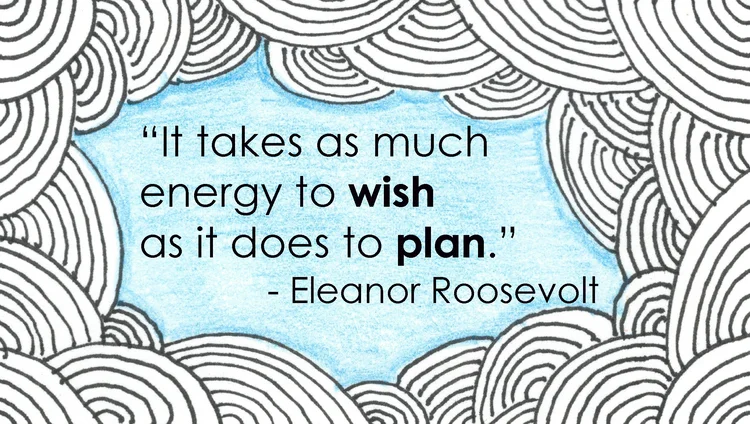

"It takes as much energy to wish as it does to plan." - Eleanor Roosevolt


A Subject Matter Expert (SME) is a person who has experience and capability in a certain field of study or discipline. On major project teams, they are the ones who you can in to make sure that what you are proposing is technically feasible or won't break a current process or system. Although in today's fast-paced, mobile, technology-drenched environment, people are rewarded for broad curiosities and interests, there is no substitute for deep expertise in an area. So, as we begin this new week, I am challenged to think about the areas in which I am an SME and how I can go deeper to learn more to strengthen my value there and how I might make that expertise available to solve problems and create possibilities.


Jennifer was recently quoted several times in Bridging Analog And Digital, an article by Shonan Noronha of Sound & Communications, regarding Planar’s Transparent OLED prototype. Shonan viewed the T-OLED at InfoComm15 this year and published the article that provides an overview of digital displays that will be attractive to retail professionals and designers.


The following article was recently featured on LinkedIn.
You may have heard about LinkedIn and wondered whether it was for you. As a student, particularly a high school student or in the early years of your college journey, you might wonder if the time is right to join this network or wait until you have more experience or your diploma and are looking to start a your professional career. Here are some thoughts to consider.
1. You are starting your career now
The skills you are learning and the relationships you are building now, will be important later as well, so don’t wait.
2. Join LinkedIn
It is the world’s largest professional social media network at 380 million users. A new member joins every 2 seconds. Go ahead and list your school, major activities or awards, service organizations for which you volunteer, and list your title as “Student” (unless you want to get creative and you want to be an “Academic Technician” or “An Agent of Change”). You’re your profile professional and focused on academic or professional work, not your preference in music or your summer vacation plans (there are other networks for that). List out your skills and experience so others can endorse you. Don’t forget to list entrepreneurial activities as well. Your profile is 11x more likely to get viewed with a photo and 13x more likely to be viewed when you list skills.
And remember, it is editable, so things that are important for you to highlight today might not always be, so plan to curate your profile regularly to make sure the most important things are highlighted there.
Like any social network, don’t give out your personal information too broadly. Things like your personal email address and the like can be hidden. You can choose to use your first name and last initial until you are more comfortable with the system. You should include a picture, if you are comfortable, but make sure it is professional (like a school photo or one taken when you were giving a speech or working in a lab, instead of one taking on a jet ski or at the football game). You must make wise decisions regarding your own privacy, of course, and those are very personal decisions that you should consider with your parents and trusted advisors.
3. Connect
The whole point of a social network is to, well, network. Start by sending LinkedIn requests to your teacher or professors. Invite fellow career-minded classmates. Invite your mentors and adult friends that know you well.
4. Be generous
There are several features on LinkedIn that all you to participate in a generous way, as you learn the ropes.
First off, you can read the news feed of those you follow and like or comment on their news. Congratulate someone on a new job or major project completion. Comment thoughtfully and supportively on a published article.
Second, you can endorse the people you are connected to for their skills. A few endorsements per person is appropriate.
Thirdly, you can write recommendation notes. Read what others have written and you can add your own. Remember that these will likely live on the site for years to come, so keep them professionally worded and highlight transferable skills. For instance, when writing a recommendation for a friend who was the yearbook editor, you can mention that project, but then say how you appreciated their attention to details and deadlines and how they modeled teamwork. Those are things that future employers officers might be interested in, after all.
If you start supporting, endorsing, and recommending others, you will find that they will do the same for you and your profile and network will grow.
This article was posted on the Saturday Academy website.
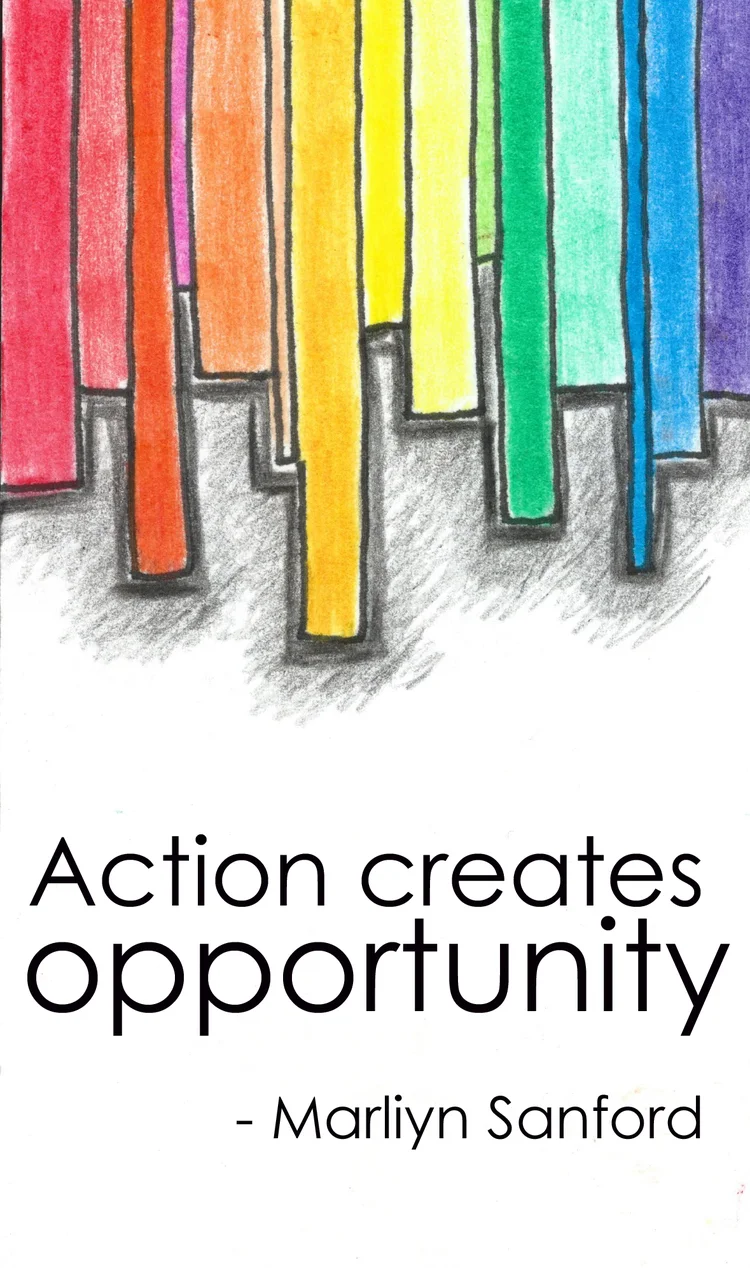

We often think that opportunity creates action. We will do something great once some external condition is met. But the opposite is true. Action creates opportunity. Start making movement and see your goals easier to achieve.

“Marketing Marketing” was featured in a recent rAVe newsletter to the ProAV industry.

Jennifer joins Glenn Gow, CEO of Crimson Marketing, for an interview entitled "Digital Display Advertising in the Data Analytics Age" on their podcast series "Moneyball for Marketing." Jennifer talked about the need to build trust with customers, while partnering with sales and measuring results for maximum impact.


Trying to think out of the box is like navigating a star field. It is hard to avoid the next box in the galaxy.


“Mr. Watson – Come here – I want to see you.” These were the words spoken by Alexander Graham Bell, the inventor of the telephone, when he made his first call on March 10, 1876.
If Mr. Bell had available to him all the various communications technologies available today, what would he have used?
Perhaps he would have buzzed off a text, Snapchat, or WhatsApp with the phrase “W - come here. I want 2 C U.” It might have included a pin on a map to his exact location. He would have thrown in an emoticon or Emoji that expressed his current mood.
Or if he wanted to replicate the effect of multiple people listening in on the call (see photo above), then he might have posted it on social media. “Come here, @MyDearMrWatson. Your ninja assistant skillz are needed” he would have tweeted. Perhaps a selfie and the caption “See what you are missing? #ComeOnOver” would have posted to Instagram or Facebook.
Or perhaps we would have just said “Siri, find Watson.”
There are five main factors that have impacted my use of the phone the last few years, causing me to use the phone less:
1. Asynchronous communication: In our 24x7 bustle of business today, it is impossible to assume that people will be available for a conversation at the same time. This is further complicated if you want to get more than two parties in conference. Emails will wait until people are available. Even the more immediate text messages will hold until people can read and respond.
2. Mobility: The rise of the text is in direct proportion to the rise of mobility. People aren’t looking at emails on their desktop, they aren’t talking on the phones (which are increasingly awkward for phone conversations without a Bluetooth headset), but rather they are looking at small screens and wanting to respond efficiently, often while doing something else. These factors combine to make text (or the close equivalent of audio or video text) the best option.
3. Record Keeping: Unless recorded, phone conversations are poor for record keeping. Emails, and even texts, can provide a “paper trail” as things need to be referenced (i.e., What day did I say I would come back with a proposal?) or researched (i.e., What pricing did Bill commit to?). And what is better for documentation than a photograph, which have forever changed the kind of communications we are doing.
4. Beyond Audio: Photos on Instagram or Super, videos on YouTube, Vine, Meerkat, FaceTime, or the use of hashtags in multiple formats to allow for searching and categorization – all of these new technologies go beyond simple audio to give a richer experience. In our experience, a growing number of Planar desktop monitors come with integrated web cameras for precisely this reason. If a pictures is worth a 1,000 words, then a picture is work a 7.7 minute voice mail (at a typical reading cadence).
5. Voice Mails (from Hell): I am not a fan of the audio message or voice mail. It is slow and no one is very good at it (leaving messages, listening to messages, the whole process). We include too many details, rambling on and boring our recipient. Or we leave our critical information (like a return phone number that can be clearly heard). As a marketing executive, I am convinced I am on every mailing list in the hemisphere and get dozens of voice mails each day, so perhaps I am particularly jaded, but there is no denying that it is faster to read a text or an email than it is to listen to the same recorded in voice mail.
All of these speak to an over-arching trend and that is the pace of business life. Mr. Bell’s message was surprisingly urgent for its day. In 1876, nearly everything could wait. It had to. But today we can’t tolerate a delay and we want instant answers to our questions, so that we can provide instant answers to our customers.
By 1915, Bell had finished the first transcontinental phone line. He picked up the line in New York and told Watson to come there, repeating his line from 30 years earlier. Watson, who was sitting in San Francisco, joked that he would come in a week before they’d be face-to-face. I guess even these pioneers of telephony would have preferred Skype.
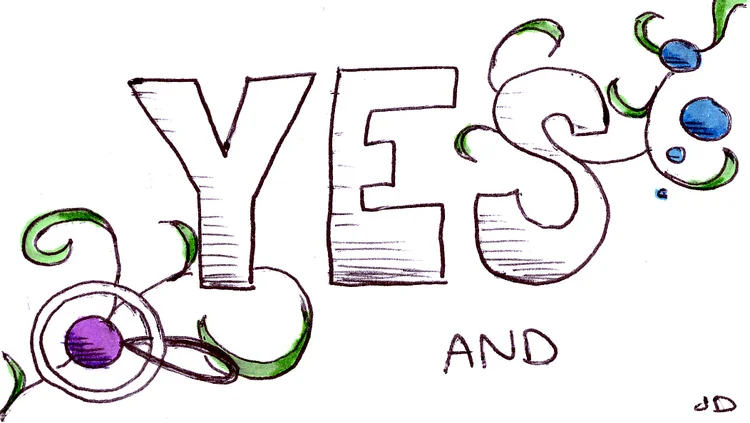

Responding to a new idea or engaging in conversation with "Yes, and..." is better than the alternative "No, but..."
The former opens people up to change and possibility. The second puts them on the defensive and shuts down the conversation and collaboration.
Try not to use the word "but" today and see what subtle changes occur in your relationships.

In her book, You Can Kill an Idea, But You Can't Kill an Opportunity author and consultant, Pam Henderson, contrasts ideas to business opportunities and creates a framework for exploring and developing opportunities. In her vernacular, ideas are the proverbial shiny objects that are tactical in nature and might distract an organization from the real opportunities before them.
As a bit of an "idea factory" myself I do find it important to keep the business goals ever present. After all, creativity can be waste, unless the unique and original ideas are valuable to your customers or lead your organization forward.

"Five Things Everyone Should Know How to Do" was featured in a recent rAVe newsletter to the ProAV industry.

No one speculates that anything good is going on. This is namely because we each judge ourselves according to our intentions and we judge others according to their behavior. And the more authority a person has the more the "magnification effect" is at play, making each simple or harmless behavior take on new (and often sinister) meaning. It's human nature.
Be bigger than your human nature. Choose to be generous with your explanations and clarify or confirm with people directly. It will save you hours of speculation and add years to your life.

Work, at least in a lot of business, happens in meetings. Because of the time spent, opportunity cost of those hours, and the types of decisions made in those meeting, making them more effective can have a huge impact on the overall success of the company.
In his book Traction, Gino Wickman outlines the basic of a Level 10 meeting. See video to learn more about how it works and how to apply it to your next meeting.

The Portland chapter of the American Marketing Association is featuring Jennifer Davis' guest blog entitled "Y is for You: What Google's Alphabet Teaches Us About Personal Branding."